
Safe Sleep Initiative: Promoting Newborn Safety in the Pediatric Emergency Department
AUTHORS:
Lisa M. Pace, MD; Todd Wylie, MD; Phyllis Hendry, MD; Jennifer Fishe, MD
University of Florida College of Medicine, Jacksonville
QI RESEARCH | PUBLISHED Summer 2026 | Volume 46, Issue 3
DOWNLOAD PDF
Abstract
The “Safe Sleep Initiative” at the University of Florida Health Jacksonville aims to promote safe sleep practices for newborns in the pediatric emergency department through the utilization of educational surveys, informative videos, and visually engaging posters. This multifaceted approach seeks to educate parents, caregivers, and staff on the importance of safe sleep environments for infants. With the goal of video-interactive surveys, educational videos, and eye-catching posters, this initiative strives to increase awareness and adherence to safe sleep guidelines, ensuring the well-being of newborns in the pediatric emergency department setting and at home.
Introduction
Sleep-related infant mortality remains a significant public health concern in the United States. In 2020, approximately 3,389 infant deaths were attributed to sudden unexpected infant death (SUID), which encompasses sudden infant death syndrome (SIDS), accidental suffocation and strangulation in bed (ASSB), and other ill-defined causes. Among these, SIDS accounted for 41% of deaths, ASSB for 27%, and unknown causes for 32%.¹
Despite longstanding recommendations from the American Academy of Pediatrics (AAP) advocating for safe sleep environments—including supine positioning, firm sl eep surfaces, and avoidance of soft bedding—adherence among caregivers remains suboptimal. Recent national survey data indicate that only 55% of infants are consistently placed in the supine sleep position, and nearly 40% of caregivers report engaging in bed-sharing practices.² These behaviors contribute to ongoing disparities in infant mortality rates and underscore the importance of clinician-driven education.
Healthcare providers are uniquely positioned to influence parental behaviors through anticipatory guidance and the consistent delivery of evidence-based recommendations. This manuscript examines current epidemiological trends in sleep-related infant deaths, evaluates the effectiveness of clinician-led educational interventions, and explores strategies to improve caregiver compliance. By strengthening provider communication and aligning clinical practice with public health messaging, clinicians can play a critical role in reducing preventable sleep-related infant mortality. The objective of this educational initiative was to raise awareness amongst clinicians and parents/caregivers of safe sleep practices.
Methods
This prospective educational study was conducted in the pediatric emergency department (PED) at the University of Florida Health Jacksonville (UF Health) in Duval County, Florida, from July 2024 to July 2025. The project aimed to enhance safe sleep practices among caregivers of infants under one year of age and UF Health staff (attending physicians, resident physicians, nurses, and technicians) within the PED by implementing a multifaceted educational program.
Intervention Components
- Visual Educational Materials: Posters illustrating the AAP’s safe sleep recommendations—placing infants on their backs, in a crib, and without soft bedding—were displayed prominently in PED examination rooms and waiting areas. Each poster included a Quick Response (QR) code linking to additional resources on safe sleep practices. All resources were provided in both English and Spanish.
- Informational Postcards: Caregivers received postcards containing QR codes that directed them to videos demonstrating safe sleep environments and presenting statistics specific to SIDS in Duval County. These materials aimed to provide accessible and localized information to caregivers. All resources were provided in both English and Spanish.
- Educational Video: An evidence-based educational video was utilized from the National Institutes of Health and made available to both caregivers and PED staff. The footage covered key aspects of safe sleep practices, including the importance of placing infants on their backs to sleep, using a firm sleep surface, and avoiding bed-sharing. The video was accessible via QR codes on the posters and postcards for staff and families.
Participants
The study included two primary participant groups:
- Caregivers – Individuals who were the primary caregivers of infants under one year of age presenting to the PED during the study period.
- PED staff – Attending physicians, resident physicians, nurses, and technicians involved in the care of infants in the PED.
Data Collection
Both caregivers and PED staff were invited to complete pre-intervention surveys assessing their baseline knowledge and attitudes regarding safe sleep practices. Each group was shown posters, provided with postcards with safe sleep resources, and watched the National Institutes of Health NIH approved educational video demonstrating safe sleep practices. Participants then completed post-intervention surveys to evaluate changes in knowledge and comprehension. Surveys included multiple-choice questions covering topics such as recommended sleep positions, appropriate sleep environments, and awareness of SIDS risk factors.
Data Analysis
We performed descriptive statistics, including frequencies, means, and medians, as appropriate, for survey responses and demographics of respondents. We compared before and after responses for each group (i.e., caregiver or PED staff) using the student’s t-test.
Ethical Considerations
The study protocol was reviewed and approved by the University of Florida – Jacksonville Institutional Review Board as exempt human subjects research (UF IRB registration #ET00042844). Participation was voluntary, and informed consent was obtained from all participants prior to enrollment. Data confidentiality and participant anonymity were maintained throughout the study.
This multifaceted educational approach aimed to reinforce safe sleep practices among caregivers and healthcare providers, thereby contributing to the reduction of sleep-related infant deaths in Duval County.
Results
Demographics
A total of 20 caregivers of infants under 12 months of age and 60 pediatric emergency medicine faculty members, including residents, attending physicians, nurses, and technicians, participated in the study. Further demographic data, such as age, ethnicity, race, and gender, were not obtained during this study.
Caregiver Knowledge and Understanding
Pre-intervention surveys indicated that 95% of caregivers correctly identified the supine position as the safest for infant sleep. Post-intervention, this remained at 95%. Awareness of the importance of a firm sleep surface rose from 75% to 85% (P = 0.4350). Although not statistically significant, it is valuable to note that 10% of caregivers who previously practiced co-sleeping reported an increased awareness that co-sleeping should be avoided. Furthermore, post-intervention, an additional 10% of caregivers recognized the importance of using a firm mattress for infant sleep, and a further 5% acknowledged that the crib should be free of other items, such as toys, pillows, or loose bedding.
While future behavioral intentions were not surveyed during this study, many caregivers self-expressed that they knew someone who had a child affected by SIDS and that they felt the interventions were necessary. Additionally, caregivers mentioned that the educational video was helpful and that the QR code-linked resources were easy to access.
Faculty Knowledge and Confidence
Among faculty, knowledge of the AAP safe sleep guidelines, there was a statistically significant improvement in PED staff knowledge regarding the association between overheating and the risk of SIDS. As seen in the table below, there was a 28.4% increase in correct responses post-intervention (p < 0.001). Among all PED staff, there was 100% accuracy when identifying that infants should not have pillows in the crib, should not co-sleep with another individual, and should not use blankets or comforters. Analysis of parent and caregiver survey data further revealed that all respondents correctly understood that infants should be placed on their backs to sleep, may sleep in the same room as an adult, and should sleep in a separate crib.
Knowledge regarding the protective role of pacifier use in reducing the risk of SIDS was limited among both PED staff and caregivers. Only 55% of faculty and 60% of caregivers answered correctly on the pre-intervention survey.
Engagement with Educational Materials
After implementing posters, postcards, and educational videos, PED staff reported that they felt the information was easy to distribute to caregivers. Feedback was overall positive, and users found the materials helpful in understanding and implementing safe sleep practices.
Summary
The implementation of visual aids, educational videos, and QR code-linked resources in the pediatric emergency department significantly enhanced both caregiver and faculty knowledge and confidence regarding safe sleep practices. The intervention also positively influenced caregivers, suggesting that such multifaceted educational approaches can be effective in promoting safe sleep environments for infants.
Discussion
The reviewed interventions demonstrate that targeted education, whether through digital platforms, community engagement, or hospital initiatives, can significantly improve adherence to safe sleep practices. Hospital-led projects underscore the importance of institutional commitment to safe sleep education, though identifying the most impactful components remains a challenge.4
As demonstrated in Table 1, there was a statistically significant improvement in PED staff knowledge regarding the association between overheating and the risk of SIDS. Specifically, there was a 28.4% increase in correct responses post-intervention (p < 0.001). Additionally, all PED staff participants accurately identified that infants should not have pillows in the crib, should not co-sleep with another individual, and should not use blankets or comforters—practices aligned with current safe sleep recommendations. Analysis of parent and caregiver survey data (Table 2) further revealed that all respondents correctly understood that infants should be placed on their backs to sleep, may sleep in the same room as an adult, and should sleep in a separate crib.
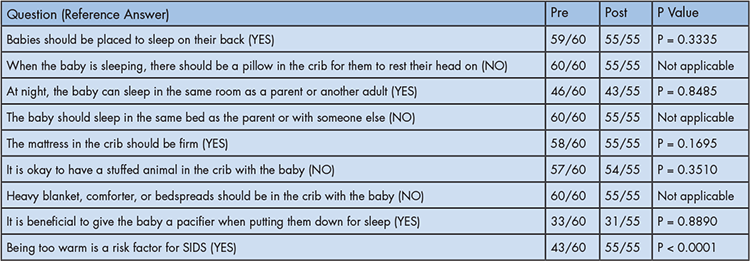
Table 1: Pediatric Emergency Department Staff Survey
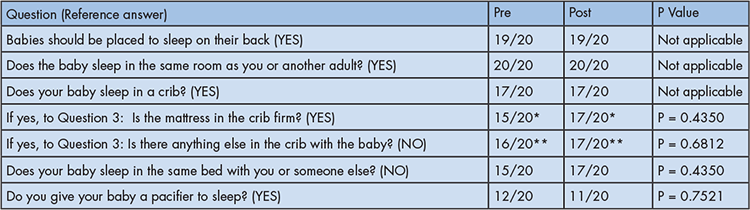
Table 2: Caregiver Survey * Counted non-answers as NOT YES **Counted non-answers as NOT NO
Although the findings were not statistically significant, it is noteworthy that 10% of caregivers who previously practiced co-sleeping reported an increased awareness that co-sleeping should be avoided. Furthermore, after receiving educational materials, an additional 10% of caregivers recognized the importance of using a firm mattress for infant sleep, and a further 5% acknowledged that the crib should be free of other items, such as toys, pillows, or loose bedding.
Knowledge regarding the protective role of pacifier use in reducing the risk of SIDS was limited among both PED staff and caregivers. Only 55% of faculty and 60% of caregivers correctly identified pacifier use as a protective factor when placing an infant to sleep, as indicated by responses on the pre-intervention survey. This data suggests an area where further education may be warranted.
Per the AAP guidelines, a pacifier should be offered at nap time and bedtime to reduce the risk of SIDS.7 While the exact mechanism remains unclear, hypotheses suggest that pacifier use may promote airway patency, enhance autonomic control, or increase arousability during sleep.5,6 These findings support the inclusion of pacifier use in safe sleep education initiatives aimed at reducing SIDS incidence. For breastfed infants, pacifier introduction should be delayed until breastfeeding is well established, typically around 3 to 4 weeks of age.7 Caregivers should not force pacifier use if the infant refuses it, and if the pacifier falls out during sleep, it does not need to be replaced.7 To ensure safety, pacifiers should not be attached to the infant with cords or clips, and they should be kept clean and replaced regularly.7
Safe sleep education is typically introduced to caregivers shortly after birth and prior to discharge from the newborn nursery. Responses from the pre-intervention surveys suggested that families did receive this information and did implement many meaningful safe sleep practices once they had returned home. Examples of this include knowing that babies should be placed on their backs to sleep, crib mattresses should be firm, and cribs should be empty without blankets, comforters, or stuffed animals. Given the high levels of stress and information overload experienced by families during the immediate postpartum period, the retention and application of safe sleep practices may be limited at that time. Therefore, reinforcing this education in the pediatric emergency department—when families are more settled and receptive—serves as a critical opportunity to enhance understanding and adherence to safe sleep guidelines.
Despite these successes, barriers persist. Cultural norms, misinformation, and socioeconomic constraints can hinder the adoption of safe sleep practices.3,4 For instance, some caregivers may prioritize traditional practices or lack access to safe sleep environments. Therefore, interventions must be culturally sensitive and address the specific needs of diverse populations. Additionally, ongoing support and reinforcement of safe sleep messages are crucial to sustain behavior change.3,4
The results of our educational initiative in the pediatric emergency department at the University of Florida Health Jacksonville demonstrate promising improvements in staff knowledge and caregiver receptivity to safe sleep practices for infants. Staff showed a statistically significant increase in correct responses regarding the association between overheating and the risk of SIDS. Caregivers responded positively to the delivered educational materials, including QR-code links and videos, indicating that hospital-based reinforcement of safe-sleep messaging is feasible even in a busy emergency-department context.
Several factors limit the scope and generalizability of our findings. First, the caregiver cohort consisted of only 20 participants, and the staff cohort consisted of 60 participants, yielding small sample sizes that reduce statistical power. Second, this study was conducted in a single institution within one geographic region and health-system context, which may limit the applicability of results to other settings, populations, or institutional cultures. Third, because baseline knowledge among caregivers was already high for some items (e.g., 95% correctly identified supine positioning pre-intervention), a ceiling effect may have limited the measurable improvement. Finally, we did not collect detailed demographic or contextual information (e.g., caregiver socioeconomic status, ethnicity, or home sleep environment), limiting our ability to explore subgroup differences or contextual moderators of the intervention effect.
Given these limitations, future research should aim to engage larger sample sizes across multiple institutions, potentially include longitudinal follow-up assessing actual sleep practices and infant safety outcomes, and incorporate detailed demographic and contextual data.
Conclusion
Promoting safe sleep practices among caregivers of infants under one year requires a multifaceted approach. Community-based programs and hospital-led initiatives each play a vital role in educating caregivers and reducing the risk of sleep-related infant deaths. To enhance the effectiveness of these interventions, future efforts should focus on cultural competence, accessibility, and continuous engagement with caregivers. By addressing the diverse factors influencing caregiver behavior, we can work towards ensuring safer sleep environments for all infants.
Conflict of Interest Disclosures (includes financial disclosures): All authors have no conflicts of interest to disclose.
References
- Centers for Disease Control and Prevention (CDC): Sudden unexpected infant death and sudden infant death syndrome: data and statistics. Updated February 6, 2023. Available at: https://www.cdc.gov/sids/data.htm Accessed April 10, 2025
- Bombard JM, Kortsmit K, Warner L, Shapiro-Mendoza CK. Safe sleep practices and sudden unexpected infant deaths: Findings from the pregnancy risk assessment monitoring system. Pediatrics. 2022;149(1):e2021053472.
- Cole R, Young J, Kearney L, Thompson JMD. Infant care practices, caregiver awareness of safe sleep advice, and barriers to implementation: A scoping review. Int J Environ Res Public Health. 2022;19(13):7712.
- Krishnamurti T, Moon R, Richichi R, Berger R. Integrating infant safe sleep and breastfeeding education into an App in a novel approach to reaching high-risk populations: Prospective observational study. JMIR Pediatr Parent 2025;8:e65247.
- Moon RY, Hauck FR. SIDS and other sleep-related infant deaths: evidence base for 2016 updated recommendations for a safe infant sleeping environment. Pediatrics. 2016;138(5):e20162938.
- Carlin RF, Moon RY. Risk factors, protective factors, and current recommendations to reduce sudden infant death syndrome: A review. JAMA Pediatrics. 2017;171(2):175-180.
- AAP policy statement: Sleep-related infant deaths: updated 2022 recommendations for a safe infant sleeping environment. Pediatrics 2022;150 (1):e2022057990.